
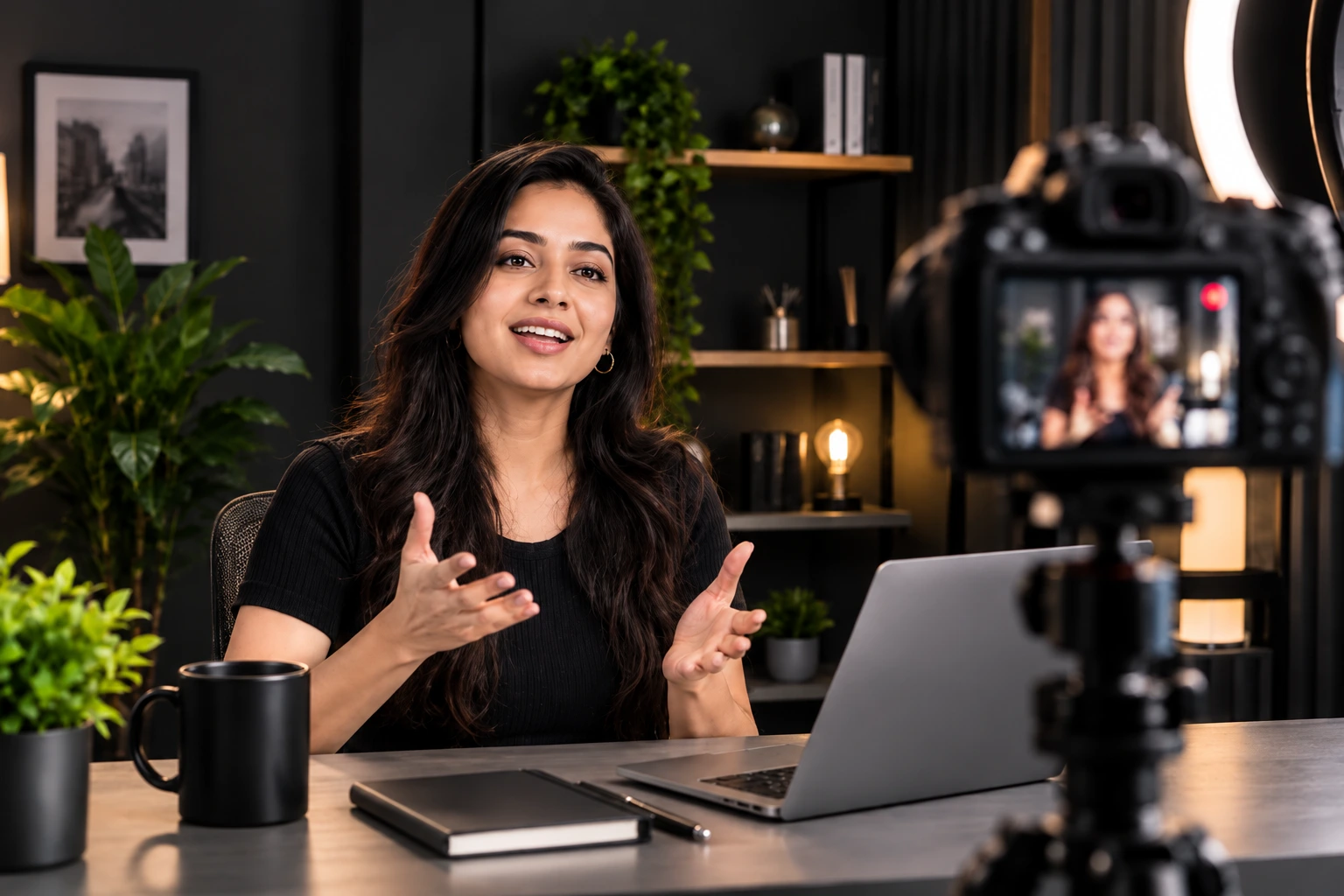
Traditional ads interrupt. Influencer content gets invited in. That's the core reason so many founders are asking how influencer marketing can help their business instead of pouring their entire budget into display ads — audiences trust a familiar face recommending a product far more than a banner asking them to buy one.
Influencer marketing has grown from a novelty tactic used by a handful of beauty and fashion brands into a mainstream channel used across categories — food and beverage, wellness, real estate, education, B2B software, and even industrial products. What used to be dismissed as "just a social media trend" now sits alongside SEO and performance marketing as one of the most reliable ways to build trust with a new audience quickly.
If you're comparing options for an influencer marketing agency in India businesses recommend, the difference usually comes down to one thing: whether the agency treats a campaign as a one-off post or as a system built around a measurable outcome.
The real business benefits of influencer marketing
- Faster trust-building — recommendations from creators convert better than cold ads because they arrive through a relationship the audience already trusts
- Access to niche audiences — micro-influencers often have tighter, more engaged communities than mass media, which matters more than raw reach for most small and mid-sized businesses
- Content you can reuse — influencer content doubles as assets for your own social channels, website, and even paid ad creatives
- Better ROI tracking — unlike traditional PR, influencer campaigns can be tied to trackable links, discount codes, and conversion events
- Stronger local reach — regional influencers help brands build credibility in specific cities or states, which is especially useful for businesses expanding into new markets
- Improved SEO signals — branded searches and backlinks generated from influencer coverage can support organic visibility over time
- Faster product feedback — creators often surface honest audience reactions to a product faster than formal market research
Where influencer marketing fits in your marketing mix
Influencer marketing rarely works well in isolation. Businesses that treat it as a standalone activity — a few posts here and there with no connection to the rest of their marketing — usually see a short spike in attention that fades within days. It performs best when it's backed by a system:
| Layer | Role |
|---|---|
| Search visibility | Ensures people who discover you via an influencer can find you again on Google when they're ready to buy |
| Social media management | Keeps your own channels active so influencer traffic has somewhere consistent to land |
| Performance marketing support | Retargets people who engaged with influencer content but didn't convert the first time |
| Content repurposing | Turns influencer content into blogs, reels, and email content that extends its shelf life |
| Video production | Produces polished brand-side videos to pair with creator-led content for a fuller campaign |
A strong digital marketing partner doesn't treat influencer marketing as a standalone line item — it connects it to SEO, paid media, and content so the momentum doesn't disappear once the campaign ends. This is also why pairing influencers with proper social media management matters — your own channels need to stay active and on-brand so influencer traffic has a consistent place to land instead of hitting a page that hasn't posted in weeks.
Types of influencers and when to use each
Not every influencer tier serves the same purpose, and choosing the wrong one for your goal is one of the most common reasons campaigns underperform.
- Nano-influencers (under 10K followers) — best for hyper-local credibility and authentic, low-cost content
- Micro-influencers (10K–100K followers) — strong engagement rates, ideal for niche products and considered purchases
- Macro-influencers (100K–1M followers) — useful for broader awareness campaigns and product launches
- Celebrity or mega-influencers (1M+ followers) — best for large-scale brand awareness, though conversion rates are typically lower than smaller tiers
Most businesses starting out get better results from a coordinated group of micro-influencers than a single large-name partnership, simply because the combined reach often costs less and converts better. Follower count alone rarely predicts performance — an account with 15,000 highly engaged followers in a specific niche can outperform one with 150,000 passive followers who scroll past sponsored content without a second glance.
How to choose the right influencers
- Match audience, not just follower count — a smaller creator with the right audience often outperforms a bigger one with the wrong one
- Check engagement quality, not just engagement rate — comment threads that read like genuine conversation are a better signal than a high like count
- Review past brand partnerships for consistency and authenticity, and check whether previous sponsored content still performed well
- Align content style with your brand's tone, so the collaboration doesn't feel forced
- Set clear deliverables — reels, stories, unboxings, or long-form reviews — before the campaign starts, not after
- Agree on usage rights upfront if you plan to repurpose the content in ads or on your own channels
Structuring a campaign that actually converts
A well-run influencer campaign typically moves through a few defined stages rather than a single burst of posts:
- Goal settingDeciding whether the campaign is built for awareness, engagement, or direct conversions, since each requires a different influencer mix and content format.
- Influencer shortlistingBuilding a list based on audience fit, engagement quality, and past brand collaborations.
- BriefingGiving creators enough creative freedom to keep content authentic while still covering key messaging points.
- Content reviewA light-touch approval process that protects brand consistency without over-controlling the creator's voice.
- AmplificationBoosting top-performing organic content through paid promotion once it's live.
- MeasurementTracking reach, engagement, click-throughs, and conversions against the original goal.
Skipping the measurement stage is one of the most common mistakes businesses make — without it, there's no way to know whether the campaign is worth repeating or scaling.
Common influencer marketing mistakes
- Chasing follower count over audience fit, which leads to reach without relevant conversions
- Over-scripting content, which makes sponsored posts feel like ads instead of recommendations
- Running one-off campaigns instead of building longer-term creator relationships that compound over time
- Ignoring performance data, so the same mistakes repeat across every campaign
- Failing to connect the campaign to owned channels, so traffic has nowhere consistent to land
Choosing the right platform for your campaign
Not every platform suits every business, and spreading a campaign too thin across channels usually dilutes results rather than multiplying them.
- Instagram — strong for lifestyle, retail, food, wellness, and visually driven brands
- YouTube — better suited for considered purchases, tutorials, and in-depth reviews where longer content builds trust
- LinkedIn — increasingly used for B2B influencer marketing, especially through founders and industry experts rather than traditional creators
- Facebook — still relevant for reaching older or more localized audiences in many Indian markets
- Emerging short-video platforms — useful for reach and discovery, though conversion tracking tends to be weaker than on more established platforms
Most businesses get better results focusing budget and effort on one or two platforms where their audience is genuinely active, rather than running a thin version of the same campaign everywhere.
Budgeting for influencer marketing
Influencer marketing budgets vary widely depending on creator tier, deliverables, and campaign length, but a few principles hold across most successful campaigns:
- Start with a test budget across a small group of micro-influencers before committing to larger, more expensive partnerships
- Set aside budget for amplification, not just the creator fee — boosting top-performing content often delivers better returns than the organic post alone
- Factor in content usage rights separately from the posting fee if you plan to reuse the content in ads
- Track cost per engagement and cost per conversion, not just the flat fee paid to each creator, to understand which partnerships are actually worth repeating
- Reserve part of the budget for repeat collaborations with creators who performed well, since ongoing relationships tend to outperform one-off posts over time
Working with an influencer marketing agency in India that businesses trust to manage the full process — sourcing, briefing, and tracking — helps avoid the common trap of overspending on reach that never converts into measurable business results.
When a local search strategy runs alongside influencer campaigns, the two reinforce each other — an influencer mention drives searches for your business name, and strong local visibility makes sure your Google Business Profile and website show up when that search happens. A partner that offers both under one roof can align campaign timing so influencer pushes and search visibility peak together, rather than running as two disconnected efforts managed by different vendors.
What Vibgyor brings to influencer campaigns
As a performance marketing agency based in Trivandrum, Vibgyor Global Web Solutions runs influencer marketing as part of a connected strategy — not a standalone favor to a creator. Our team handles influencer sourcing, content briefs, performance tracking, and the digital marketing follow-through needed to convert the attention influencers generate into actual leads and sales. That means a campaign doesn't end when the last sponsored post goes live — it continues through retargeting, content repurposing, and reporting that ties the campaign back to real business outcomes.
Frequently asked questions
How does influencer marketing help a small business?
It builds trust with new audiences faster than traditional advertising, often at a lower cost than large-scale paid campaigns.
Is influencer marketing only useful for D2C or retail brands?
No, B2B and service businesses also benefit, especially through niche or industry-specific creators who speak directly to a professional audience.
How do I measure ROI from an influencer campaign?
Through trackable links, discount codes, and engagement metrics tied to each creator's content, alongside broader brand search trends.
Should I work with macro or micro-influencers?
Micro-influencers often deliver stronger engagement, while macro-influencers offer broader reach — the right choice depends on your campaign goal.
Does influencer marketing replace SEO or paid ads?
No, it works best when paired with search and performance marketing, not as a replacement.
How long does an influencer campaign typically run?
Campaigns can range from a single post to multi-month ambassador partnerships, depending on goals.
Can influencer content be reused for our own social channels?
Yes, with the creator's permission, it's a common and cost-effective way to build a content library.
Do you help produce video content alongside influencer campaigns?
Yes, our team supports both brand-side and creator-side video production.
How does local SEO connect with influencer marketing?
Influencer mentions increase branded searches, and local SEO ensures your business shows up when people search for you.
How do I start an influencer marketing campaign with Vibgyor?
Reach out through vibgyorglobalsolutions.com to discuss your goals and target audience.